



Silvervine vs. Catnip: What's the Difference?
By Lynn Bahr, DVM
Catnip has been associated with feline fun for generations. In 1941, chemist Samuel M. McElvain and colleagues published work characterizing nepetalactone and related compounds in catnip’s volatile oil. [1]
But, as we know, cats have opinions—and not all react to catnip. That’s where silvervine comes in. It has become increasingly popular because it appeals to many cats that politely decline catnip altogether.
So, which one is better? That’s a question for your cat to answer.
The Short Answer
If you’re asking which plant appealed to more cats in direct research, silvervine has the edge. In one 2017 study of 100 domestic cats, 79% responded to silvervine compared with 68% for catnip. Of the cats that did not respond to catnip, 71% responded to silvervine. [2]s.
Why Do Some Cats Prefer One Over the Other?
Just like people have favorite foods, favorite smells, and favorite music, cats have individual scent preferences too. There isn’t a correct or better preference.
Every cat experiences the world a little differently, and that’s why we don’t believe in deciding what your cat should enjoy. We believe our job as cat parents is to create opportunities and let the cat decide.
Which Should You Buy?
If you’ve never tried either plant and have no idea what your cat prefers, silvervine is a reasonable place to start because more cats responded to it in one controlled study. [2]
If your cat already loves catnip, there’s no reason to stop using it. Many cats appreciate having both available as part of their toy rotation.
The best choice is the one your cat enjoys most.
If you’d like help comparing powder, sticks, toys, and blends, see Choosing the Right Silvervine for Your Cat.
What If My Cat Doesn’t Respond to Either?
A lack of response doesn’t mean anything is wrong with your cat or the plant. Scientists do not yet know every reason one cat responds differently from another.
Age may be one factor, but there is no single rule that applies to every cat. Some young cats respond to silvervine, while others show little or no interest and may become interested later. [4]
If your cat shows little interest in either silvervine or catnip, that’s perfectly normal. They may prefer different cat-attracting plants such as valerian root or Tatarian honeysuckle. They may be far more motivated by movement than scent. Or they may simply choose none of the above—and that’s okay, too.
If silvervine seems to be getting the cold shoulder, our guide to Why Some Cats Don’t Respond to Silvervine explores subtle responses, individual differences, and other options to try.
Silvervine vs. Catnip at a Glance
|
|
Catnip |
Silvervine |
|
Plant |
Nepeta cataria; mint family (Lamiaceae) |
Actinidia polygama; kiwi family (Actinidiaceae) |
|
Cat-attracting chemistry |
Characteristic response strongly associated with nepetalactone |
Contains several cat-attracting compounds, including nepetalactol and actinidine |
|
2017 response rate |
68% of 100 cats responded [2] |
79% of 100 cats responded [2] |
Research percentages describe the cats and materials tested; they are not a guarantee for every cat or product.
Can You Use Both?
Heck yeah! Why limit your cat to one scent experience? Many cats enjoy both silvervine and catnip.
A cat may be interested in one scent on one occasion and the other on another. There’s no hard-and-fast rule that says you have to choose. That’s like being asked to pick one favorite sweet treat forever—there are too many good options.
If you ask us, keep both on hand and offer different scent experiences over time. If you want to learn which one your cat prefers, offer them separately first before trying a blend.
Silvervine and Catnip Come From Different Plants
In case you’re interested in some science stuff: catnip and silvervine are both cat attractants, but they come from different plant families.
Silvervine, Actinidia polygama, is a climbing vine in the kiwi family that is native to parts of East Asia. Catnip, Nepeta cataria, is an herb in the mint family with a broad native range across parts of Europe, Asia, and North Africa and is now grown widely elsewhere. [2,6]
Despite those differences, cats investigate both through the same remarkable system—their sense of smell. Those heart-shaped noses are small but mighty.
Why Do More Cats Respond to Silvervine?
Remember McElvain and nepetalactone? Catnip’s characteristic response is strongly associated with nepetalactone. Silvervine contains several cat-attracting compounds, including nepetalactol, actinidine, iridomyrmecin, and others. [1,3,4]
Those chemical differences may help explain why individual cats respond differently, but scientists have not shown that silvervine’s broader chemical mix is the reason it attracted more cats in the 2017 study. Chemistry matters; the full explanation is still being worked out.
So if catnip earns a polite no-thank-you from your cat, silvervine is worth trying.
What Does a Silvervine Response Look Like?
Catnip and silvervine can produce many of the same classic rubbing-and-rolling behaviors. After getting a solid whiff of silvervine, your cat might entertain you with some of these natural behaviors: [2–4]
-sniffing
-rolling
-cheek, chin, or head rubbing
-licking or chewing
-stretching
-pawing or holding the scented item
-bunny-kicking with the hind feet
-occasional drooling
-playful movement
Not every response is dramatic. Some cats become playful. Others rub and roll more quietly. Some investigate briefly, walk away, and return later. There isn’t a right way to engage with silvervine.
Does Catnip Feel Different?
Honestly, it’s hard to know how cats feel. From what we can observe, the responses to catnip and silvervine can look remarkably similar.
The biggest practical difference often isn’t how dramatic the response is. It’s whether your cat responds at all. One cat may favor catnip. Another may ignore it but immediately begin rolling in silvervine. Another might enjoy both.
Like us, cats are individuals with their own tastes and preference
Current research does not establish that silvervine is universally safer than catnip. Both should be offered as cat-attracting scent experiences using suitable products as intended. For silvervine-specific safety evidence, see Is Silvervine Safe for Cats?.
Why does my cat get so worked up after catnip?
Some cats become very excited after catnip. That excitement may look like rough play, chasing, swatting, or other behavior a cat parent finds inappropriate. It is often temporary excitement rather than true aggression. Give the cat space, separate pets if needed, and consider trying silvervine as a different scent experience.
Just Remember..
Scent plays a major role in how cats explore their world. Some gravitate toward catnip, others toward silvervine, and some enjoy both.
The point isn’t deciding which plant wins. It’s giving your cat interesting choices and discovering what makes them light up.

Frequently Asked Questions
Is silvervine stronger than catnip?
Not necessarily. Silvervine attracted a larger percentage of cats in one controlled study, but that does not mean every responding cat has a stronger or more intense reaction. [2]
Can cats have silvervine and catnip together?
Yes. You can offer both, either separately or in a blend. If you want to learn which scent your cat prefers, offer them separately first.
Why does my cat ignore catnip but love silvervine?
In one study, 71% of the cats that did not respond to catnip responded to silvervine. The two plants contain different cat-attracting compounds, which may contribute to individual preferences, but scientists do not know every reason for the difference. [2–4]
Is silvervine safer than catnip?
A 2026 free-choice study also found that cats engaged in self-anointing more reliably with silvervine than with catnip under the conditions tested. The researchers cautioned that the free-roaming sample was small and the plant sources were limited. [5]
Before you toss your stash of ’nip, we aren’t suggesting silvervine replaces catnip. Many cats enjoy both. Some prefer one over the other, and a small percentage simply aren’t interested in either.
Instead of pitting the two options against each other—what does better mean anyway?—think of them as different ways to encourage play, scent exploration, and natural feline behaviors.
Want More?
New to silvervine? Start with The Complete Guide to Silvervine for Cats (Matatabi) for a complete overview of how silvervine works, how to use it safely, and how to choose the right products for your cat.
You may also enjoy:
- Is Silvervine Safe for Cats?
- How to Use Silvervine for Cats
- Why Some Cats Don’t Respond to Silvervine
- Choosing the Right Silvervine for Your Cat
Scientific and Botanical References
The information in this article is based on peer-reviewed research and current botanical references. As new research becomes available, our recommendations may continue to evolve.
1. McElvain SM, Bright RD, Johnson PR. The constituents of the volatile oil of catnip. I. Nepetalic acid, nepetalactone, and related compounds. Journal of the American Chemical Society. 1941;63:1558–1563. doi:10.1021/ja01851a019.
2. Bol S, Caspers J, Buckingham L, Anderson-Shelton GD, Ridgway C, Buffington CAT, Schulz S, Bunnik EM. Responsiveness of cats (Felidae) to silver vine (Actinidia polygama), Tatarian honeysuckle (Lonicera tatarica), valerian (Valeriana officinalis) and catnip (Nepeta cataria). BMC Veterinary Research. 2017;13(1):70. doi:10.1186/s12917-017-0987-6.
3. Uenoyama R, Miyazaki T, Hurst JL, Beynon RJ, Adachi M, Murooka T, et al. The characteristic response of domestic cats to plant iridoids allows them to gain chemical defense against mosquitoes. Science Advances. 2021;7(4):eabd9135. doi:10.1126/sciadv.abd9135.
4. Bol S, Scaffidi A, Bunnik EM, Flematti GR. Behavioral differences among domestic cats in the response to cat-attracting plants and their volatile compounds reveal a potential distinct mechanism of action for actinidine. BMC Biology. 2022;20(1):192. doi:10.1186/s12915-022-01369-1.
5. Uenoyama R, Miyazaki T, Ooka S, Nishikawa T, Miyazaki M. Free-Roaming and Captive Cats Prefer Silver Vine to Catnip for Self-Anointing. Journal of Chemical Ecology. 2026;52(3):43. doi:10.1007/s10886-026-01717-3.
6. Royal Botanic Gardens, Kew. Plants of the World Online: Nepeta cataria L. Native range and botanical classification. Accessed October 2026.
About the Author
Lynn Bahr, DVM
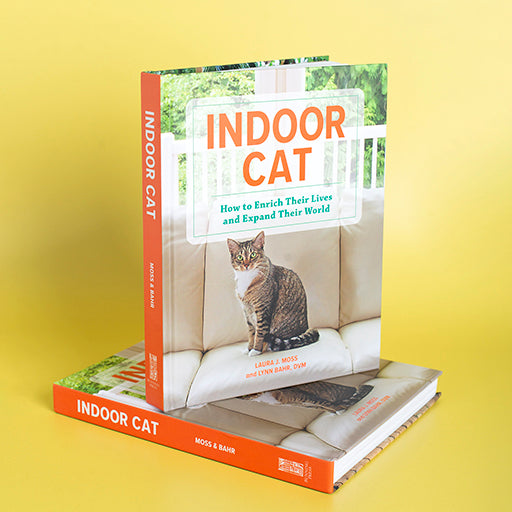
Dr. Bahr is a feline veterinarian, founder of Dezi & Roo, and author of Indoor Cat: How to Enrich Their Lives and Expand Their World. She is passionate about helping cat parents better understand and care for their cats.
This article is intended for educational purposes and is not a substitute for individualized veterinary advice. If you have questions about your cat’s health or a specific medical condition, consult your veterinarian.