



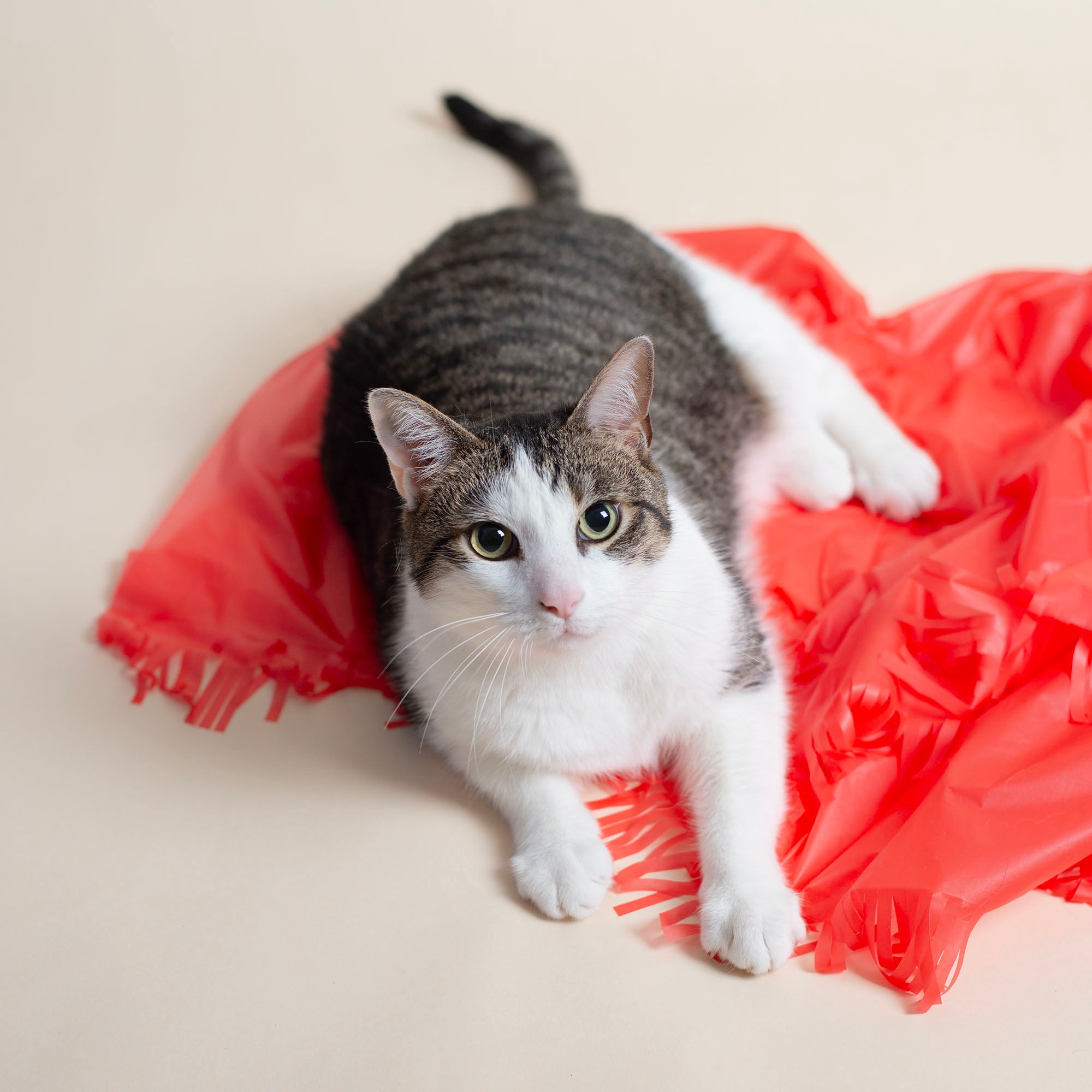




Your Cat Isn't "Getting Back at You," Pinky Promise.
He peed on my bed because he was mad.
She knocked my glass off the counter on purpose.
She scratched the couch after I left for vacation.
Cats are often accused of being spiteful furry masterminds plotting revenge for every perceived injustice. And considering how smart and mischievous they are (except the ones with single brain cells), it's not a far stretch to assume such things.
Except.. you know what they say about those who assume. 😒

Here's the deal: cats don't behave out of malice, spite, revenge, or a yearning to teach us a lesson because cats don't think like us silly humans.
What we interpret as my cat is getting back at me is almost always 99.999% your cat trying to communicate with you. Cats repeat behaviors because something in their environment, body, routine, or emotional state is, quite frankly, no bueno.
As frustrating as it is in the moment – when the pee is soaking into the couch cushion, the potted plant is sideways on the floor with soil scattered er'rywhere, or the chair you just bought has new artwork on it – it's actually a win because behavior problems are much easier to solve when we stop treating them as personal attacks.

Remember I mentioned cats don't think like humans? Spite requires complex motives like revenge, resentment, and intentional punishment. Current feline behavior research does not support the idea that cats think in this type of way. Cats are highly sensitive animals who respond to stress, anxiety, fear, pain, environmental changes and unmet physical or mental needs.
Many “bad” behaviors are actually coping strategies (and calling a behavior bad is another issue all together, because again, it's simply how our feline creatures communicate their needs to us).
A cat peeing outside the litter box is usually experiencing stress, discomfort, litter box
dissatisfaction, or a medical issue and most likely not plotting revenge because dinner was five minutes late.
A cat scratching furniture is often doing perfectly normal cat things like stretching, claw
maintenance, or seeking stimulation, not trying to intentionally destroy your expensive investment piece.
As a veterinarian who only treated feline patients, these are some of the more common behaviors I believe cat parents consider to be "spiteful" and how I typically address them.
My cat pees on things when he's mad at me.
This is one of the biggest myths in cat behavior. And while emotions can be high (understandably) from the frustration of trying to figure out whats going on in your cat's head, it's important to remember inappropriate urination is strongly linked to:
-Stress
-Pain
-Urinary issues
-Dirty litter boxes
-Poor litter box placement
-Conflict with other cats
-Changes in routine or environment
It can feel like there's a mystery afoot, so here are starting points to a solution:
-Schedule a veterinary exam to rule out any medical issues
-Add more litter boxes (the golden rule is one per cat, plus one extra)
-Scoop at least once daily, no one wants to use a dirty toilet, your cat is no different
-Use unscented litter
-Avoid covered boxes if your cat dislikes them
-Place boxes in quiet, low-traffic areas
-Clean accidents with an enzymatic cleaner
-Reduce household stressors when possible
Even subtle changes like a new couch, visitors, construction noise, or outdoor cats visible through the window can trigger elimination problems in sensitive cats.
My cat destroys furniture on purpose.
If you've been here a while or seen my vids on social, you've heard me say it a million times: scratching is natural and how cats communicate–not only with us but with each other. It's not an act of defiance. It’s instinct. Cats scratch in order to:
-Stretch muscles
-Maintain claw health
-Release energy
-Leave scent signals
-Create visual marks
Punishing scratching often increases stress and can actually worsen the behavior.
My suggestions to encourage scratching in more appropriate places:
-Provide multiple scratching surfaces for your cat
-Experiment with vertical and horizontal scratchers
-Place scratchers near favorite sleeping areas
-Reward use of approved scratchers
-Increase play frequency and duration
-Trim nails regularly
If your cat is drawn to a particular chair or couch, take notice of how they're scratching it and what material or texture its made of. Many cats simply prefer the texture or stability of your couch over a flimsy scratching post that's tucked away in the corner. Here are more tips if your cat is scratching everything except the thing they're supposed to scratch.
My cat acts out when I leave.
Cats thrive on predictability. Changes in routine can create anxiety, boredom, or frustration. That “revenge behavior” after vacation may actually be stress-related behavior from disrupted routines and reduced stimulation.
Try to ease your cats stress during shifts in routines:
-Bump up interactive play sessions, that means you and your cat playing together
-Cycle toys regularly
-Provide climbing spaces and hiding spots
-Leave puzzle feeders while away
-Enlist the help of a friend/family member or hire a cat sitter for daily visits
-Keep feeding schedules consistent
-Use calming pheromone products when appropriate
Mental enrichment is not a nice to have for indoor cats. It’s vital to their wellness, both mentally and physically.

When we say a cat is being mean, spiteful, or vindictive, we miss the real issue. Your cat is constantly communicating to you through their behavior. The challenge is learning to pick up what they're putting down correctly.
A stressed cat is not a bad cat.
A scared cat is not a manipulative cat.
A cat having accidents is not trying to ruin your day.
Most behavior problems improve dramatically when we focus on:
- Medical care
- Stress reduction
- Environmental enrichment
- Predictable routines
- Appropriate outlets for natural feline behaviors
Your cat is not trying to win a mind-game. They’re trying to feel safe, comfortable, stimulated, and understood. And once we start responding to the cause instead of the myth, life gets much better for everyone involved.
Share:
2 comments
-
Excellent article.
Cyndi Zack on
-
Thank you for sharing this wisdom and suggestions to make life with our beloved feline family members easier to understand. While it seems to me that all of this should be second nature, to so many, it doesn’t seem to be. Hopefully this will improve cats’ lives with their humans!
jmuhj on