





Giving Your Cat Choice and Control
If your cat could write an online review of their home, it would probably be something like Excellent sunbeam access. Food arrives on schedule. Primary human acceptable, secondary human mildly tolerable. Bed, cozy. Would nap here again.
As positive as that sounds, modern animal welfare science suggests cats (and other captive animals) are happier when two things are available to them: choice and predictability.

Researchers continue to find that cats with more control over their environment — and more consistency in their daily routines — tend to show better welfare indicators, like lower stress levels, healthier behavior, and improved emotional well-being. In cat terms, happiness is not about luxury. It is about having options.
If you search “choice and control” you'll find a number of research papers on the topic. A growing body of research shows animals experience better welfare when they can make decisions about where they rest, when they interact, and how they move through their environment. For cats, this matters enormously because even your floofy Mr. Meow carries the instincts of an independent hunter and territorial decision-maker. Deep down, your cat would very much like to be the tiny manager of his own universe.
But unfortunately, modern indoor life often removes much of that control. Some people might find this ridiculous, but I suspect if you're reading this, you'll appreciate the consideration and take it as something to think about.
Here are some examples of how life indoors is the trade off for control:
- Most cats do not choose where their food bowl sits
- They do not choose when meals happen
- They do not choose the type of bowl they eat from
- They don't pick the location of their litter box
- They don't have a say when the lights go on or off
- They don't get a vote when visitors arrive
- They do not choose what day or time the vacuum cleaner begins its campaign of terror
Imagine if every part of your day was decided for you; you eat dinner at the exact same spot every day, whether you like it or not. You cannot leave the house when guests arrive. Your bathroom sits in a noisy hallway beside the washing machine. Someone randomly picks you up while you are trying to relax.
For many indoor cats, life can quietly feel a little like that.

Okay, but here's the thing: this does not mean loving cat parents are doing anything wrong. In fact, I'm fairly certain you adore your keeks and work hard to give them an amazing life full of love, care, security and treats.
The point is welfare science encourages us to think beyond simply meeting physical needs and to consider emotional needs too, especially the need for agency.
One 2024 study on shelter cats found that environments offering hiding spaces,
climbing opportunities, and more environmental control were associated with
significantly lower stress markers. Researchers across animal welfare science
increasingly recognize that the ability to make small choices can have a surprisingly
large impact on emotional well-being.
And the beautiful thing is that cats do not necessarily need grand changes. Often, they
simply need a little more say in their own daily lives.
So, what does that mean for you? The cat parent who carried their kitty for nine months before birthing them? Maybe that means offering more than one resting place so your cat can choose between sunshine and solitude. Maybe it means noticing whether your cat seems hesitant about a certain feeding area or litter location. Maybe it means allowing
interaction to happen more on your cat's terms instead of going full blown Elmyra Duff from Tiny Toons on your cat. IYKYK. Sometimes the most meaningful thing we can give our lovely feline creature is more autonomy.
Predictability matters, too. Cats generally feel safer when important things happen
consistently. Reliable routines help reduce uncertainty and create security. To a cat,
knowing when dinner arrives is not just convenient; it helps the world feel stable and
understandable.
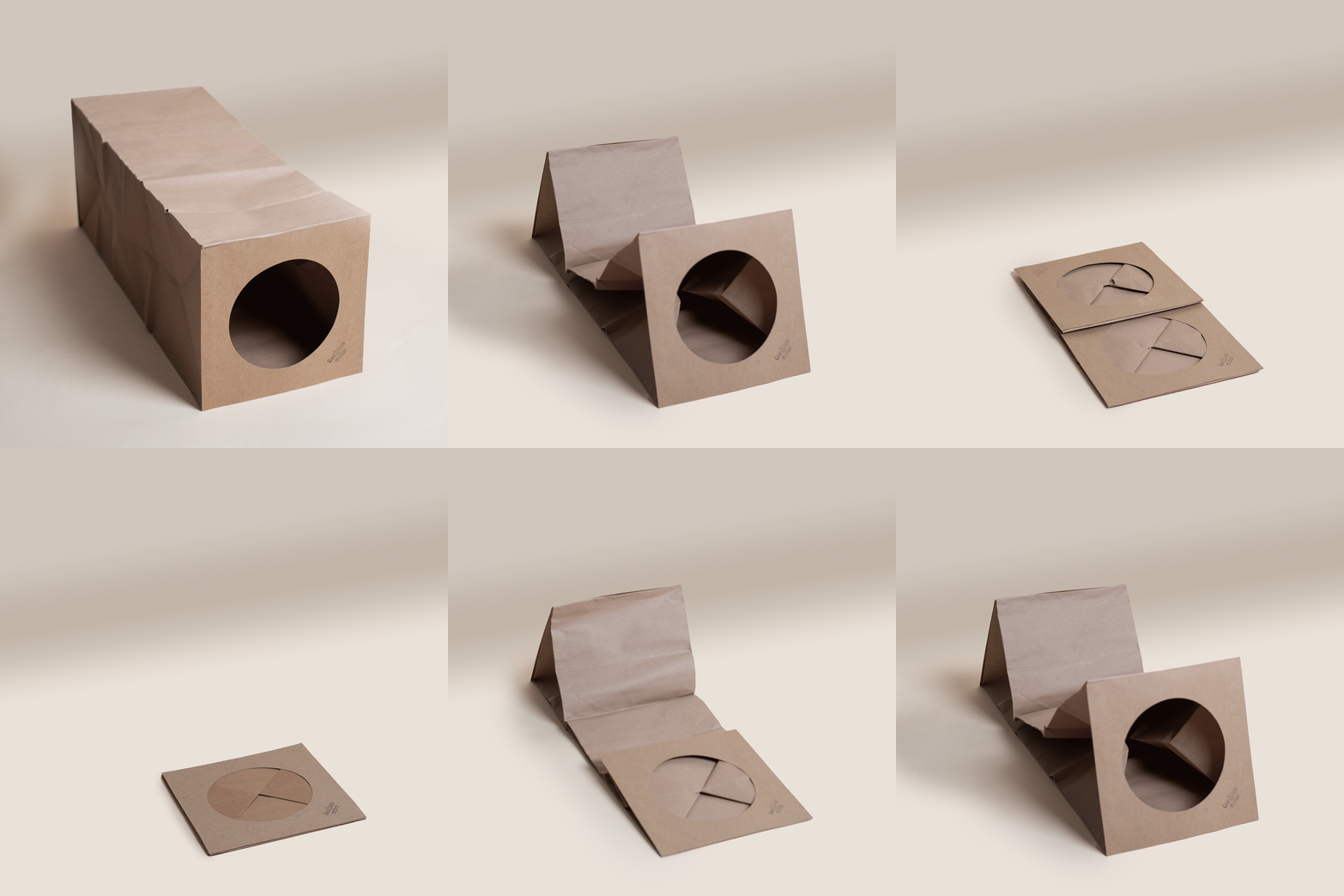
The ideal feline life is not the extremes of a spectrum; rigid control or total chaos. It is the balance of safety, routine, exploration, and freedom. A dependable breakfast followed by the exciting discovery of crispy Hide and Sneak tunnel? Hello elite-level cat living!

One more important consideration: cats express happiness differently. Some cats seek attention constantly. Others prefer stealthy observation from the hightop of the refrigerator like tiny monarch surveying his domain. A shy cat is not automatically an unhappy cat. What matters most is whether your cat feels safe enough to make choices that fit their personality.
At the end of the day, our fluffy companions might not be able to make 100% of the decisions, but science suggests that when we give them even small opportunities for choice and predictability, we help them feel secure, respected, and understood in a world they did not fully design for themselves.
Share:
1 comment
-
Great article, thank you! It’s always helpful to stop and look at life from their perspective. As such, I am reevaluating their feeder placements. I’m also sharing this with fellow cat parents :)
Lisa Barrett on